…And this raises some pretty interesting questions for anyone using AI to create content.
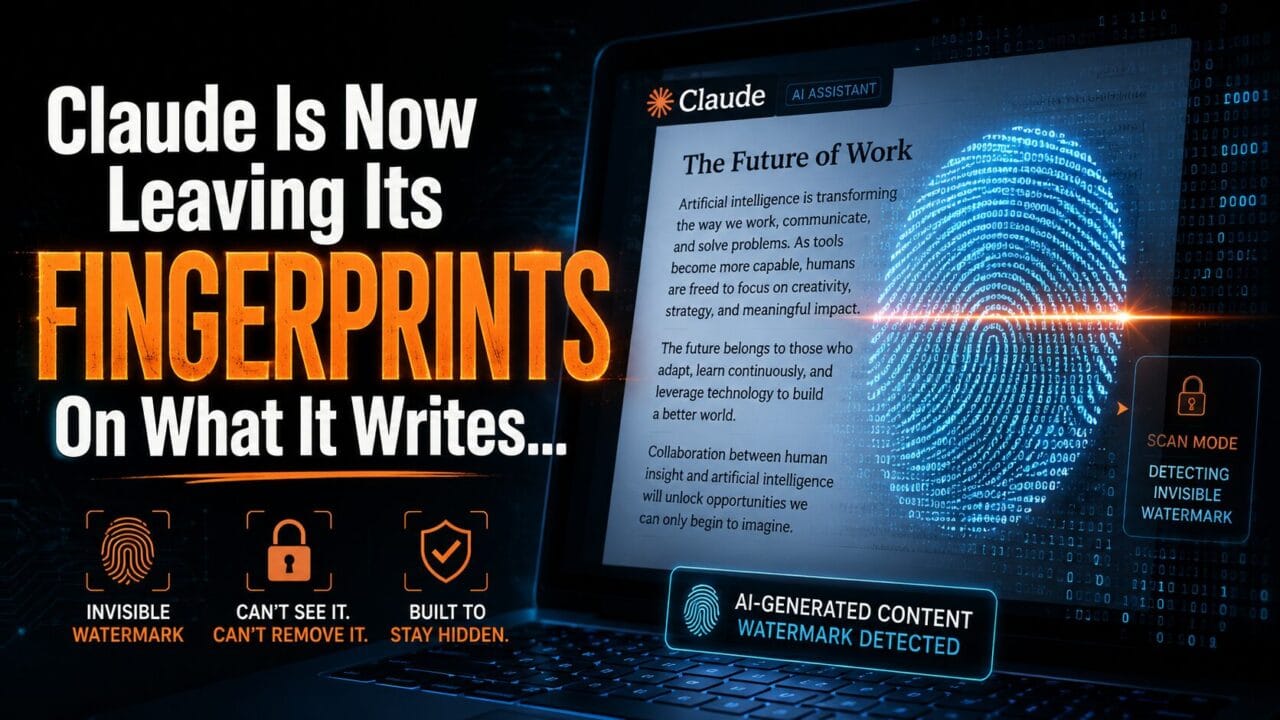
Anthropic has reportedly introduced invisible watermarking into content generated by Claude to align with upcoming EU AI Act transparency requirements.
You can’t see it.
Simply copying and pasting the text may not remove it.
And apparently, some of that watermarking can even survive light editing.
The Really Interesting Part?
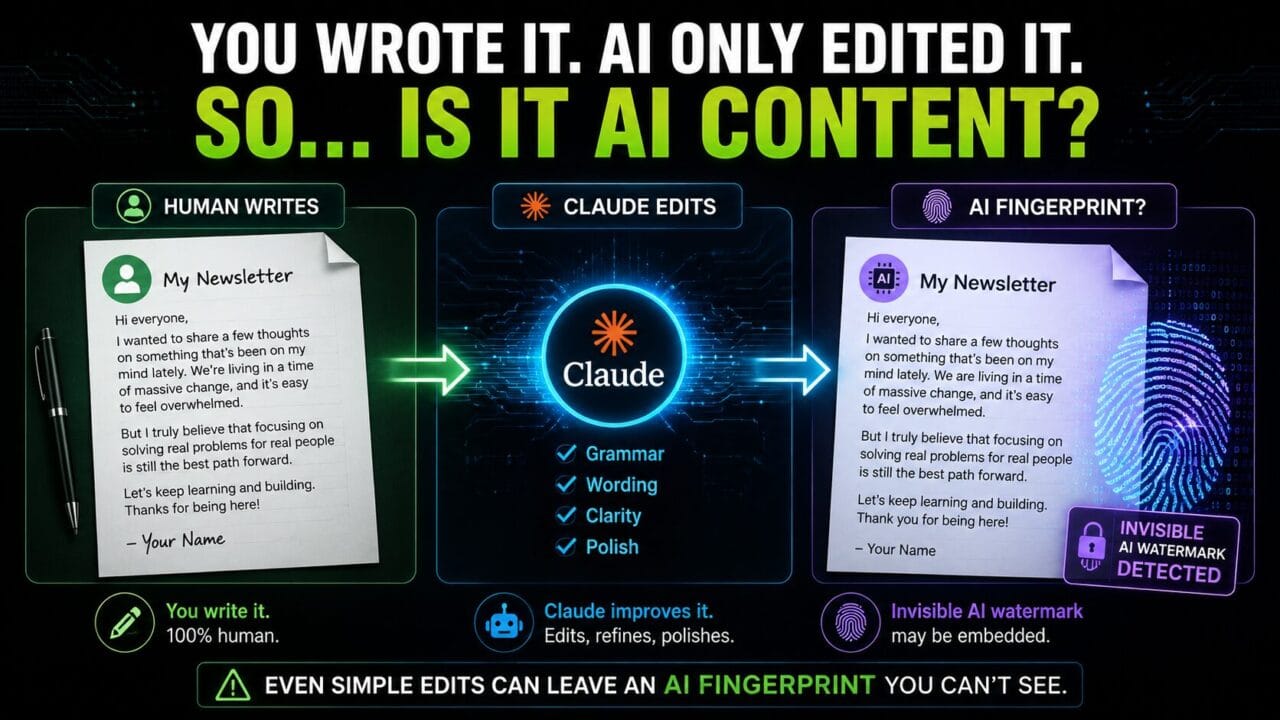
Human-written content could potentially be affected too.
Imagine writing your own newsletter, putting it into Claude to tidy up the grammar or improve the wording, and getting it back with an invisible AI fingerprint attached. 😮
That’s where things start getting a little murky.
And it brings us back to something I’ve mentioned before…
Using AI to HELP create your content is very different from asking AI to BE the creator.
There’s Absolutely Nothing Wrong With Using AI
I use it myself.
It’s an incredibly useful tool for research, brainstorming, improving drafts, generating ideas and speeding up all sorts of everyday marketing tasks. 👍
But simply asking AI to churn out content and then publishing it word-for-word as your own?
I think that approach is going to become increasingly problematic.
Platforms are getting better at identifying AI-generated and mass-produced content.
Regulators are also becoming much more interested in transparency around AI.
And I suspect we’re only at the beginning of this. 👀
But here’s the part I think marketers sometimes overlook…
A watermark might indicate that Claude has processed or influenced a piece of text, but it doesn’t prove full AI authorship from start to finish.
And It Doesn’t Just Apply To Text
In some cases, AI systems can also attach signed metadata to files like images (PNG, JPG, SVG) using open standards such as C2PA, helping track how content has been processed.
The watermarking itself works by subtly steering word choices so the model embeds an invisible statistical pattern into the writing.
It doesn’t change meaning or readability, but it does create a kind of hidden signature that can sometimes survive copy-paste and light edits.
Heavy rewriting, paraphrasing, translation, or format changes can remove it entirely.
And importantly, this isn’t just a Europe-only thing.
These systems are being rolled out at the model level across chat interfaces, APIs, coding tools, and cloud deployments globally.
But there are some important limitations too.
A detected watermark doesn’t automatically mean the content was fully AI-written.
It could simply mean Claude helped with editing, grammar, or refinement.
That means human-written work that has been lightly polished by AI could still end up carrying an AI fingerprint.
And on the flip side, determined editing or rewriting can strip the signal out completely, which makes it far from a perfect system of attribution.
Which Is Where Things Get Interesting…
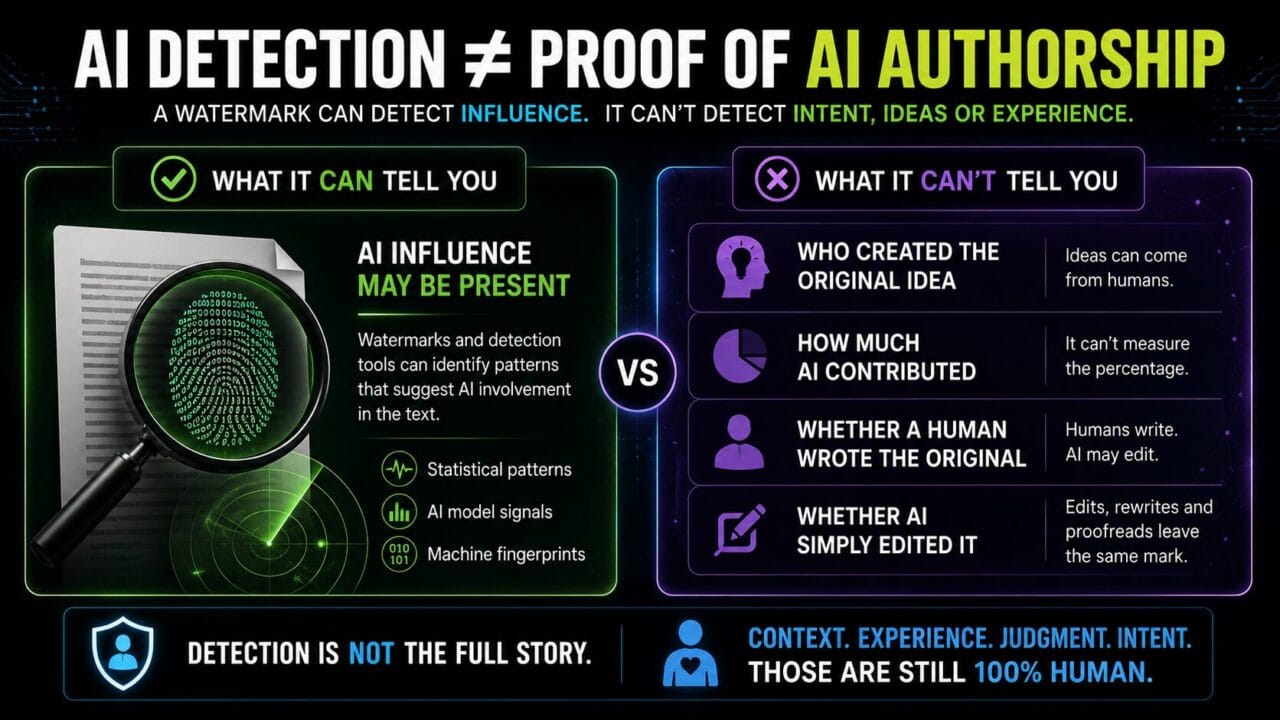
Because it means we’re moving into a world where AI-generated signals exist… but they’re not absolute proof of origin.
And that brings us back to the bigger point.
A watermark might identify AI-influenced text, but…
🔸 It can’t identify your experience.
🔸 It can’t replicate the mistakes you’ve made.
🔸 It doesn’t have your stories.
🔸 It hasn’t spent 10, 20 or 30 years learning what works and what doesn’t.
🔸 And it certainly doesn’t have your opinions. 😉
That’s where the real value is.
🔸 Let AI handle some of the heavy lifting.
🔸 Let it help you work faster.
🔸 Let it help you turn your ideas into content.
But make sure there’s still a HUMAN behind what you’re publishing. 🧠
🔸 Your experience.
🔸 Your judgement.
🔸 Your personality.
🔸 Your stories.
🔸 Your point of view.
The more AI content floods the internet, the more important I think those things are going to become
AI can give us the volume.
But WE still need to provide the value.
And here’s an interesting question…
🤔 If everything you created with AI carried an invisible AI fingerprint that could potentially be detected later, would it change the way YOU use AI?
I’d genuinely be interested to hear what you think. 👇

All the best,
Gary Nugent
P.S.: Don't forget, if you want to create an internet income of your own, here's one of my recommended ways to do that: